

Fatigue at the end of the day, headaches, difficulty concentrating... Many people talk about mental fatigue without considering whether their eyes might actually be the main cause.
However, eye strain is often confused with mental fatigue. The symptoms are similar, but the solutions are very different.
Learning to distinguish between these two types of fatigue allows you to take effective action and improve your daily comfort in the long term.
Why are mental fatigue and visual fatigue often confused?
The brain and eyes work together constantly. When a visual defect is not properly corrected, the brain must continuously compensate.
Result:
- Cognitive overload
- Decreased concentration
- Feeling of mental exhaustion
Visual fatigue then becomes general fatigue, which is difficult to identify.
What is eye strain?
Visual fatigue corresponds to excessive strain on the visual system.
It occurs when the eyes have to work harder than necessary to ensure clear vision.
Common causes
- Poorly corrected or uncorrected visual defect (nearsightedness, astigmatism, farsightedness)
- Correction no longer appropriate
- Extended screen time: 75% of adults spend more than 6 hours a day in front of a screen.
- Poor lighting
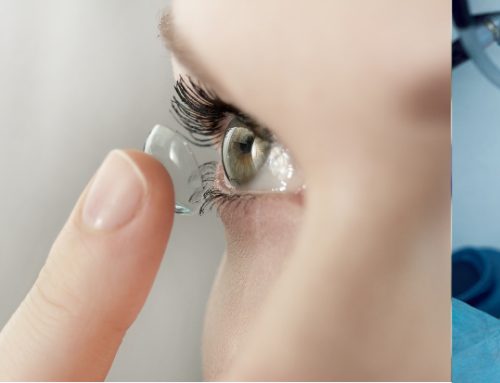
- Uncomfortable contact lenses or glasses
Typical symptoms of eye strain:
Visual fatigue manifests itself through signs that are often subtle but repetitive.
Most common signs
- Heavy or irritated eyes
- Feeling of tension around the eyes
- Intermittent blurred vision
- Headaches at the end of the day
- Need to close your eyes or take frequent breaks
These symptoms generally intensify after prolonged visual effort.
What is mental fatigue?
Mental fatigue is linked to cognitive or emotional overload.
It is not directly caused by vision, although vision can aggravate it.
Common causes
- Chronic stress
- Heavy workload
- Lack of sleep
- Emotional pressure
- Typical symptoms of mental fatigue:
Unlike visual fatigue, mental fatigue does not depend directly on visual effort.
- Difficulty concentrating
- Feeling of mental fog
- Irritability
- Lack of motivation
- Persistent fatigue even at rest
How can you tell the difference between mental fatigue and visual fatigue?
Here are some simple guidelines to help you distinguish between visual and mental fatigue.
Signs of visual fatigue
Symptoms appear or worsen at the end of the day.
- Headaches are located in the forehead or temples.
- Resting your eyes quickly improves symptoms.
- Fatigue is associated with visual activities (screen time, driving, reading).
Signs of mental fatigue
- Fatigue is constant, even without visual effort.
- Resting your eyes does not improve symptoms.
- The feeling of exhaustion is all-encompassing.
- Stress is a major trigger
Mental fatigue vs. visual fatigue: what are the differences?
| Eye strain | Mental fatigue |
| Related to visual effort | Related to cognitive load |
| Worsens with screens | Independent of vision |
| Frontal headaches | Widespread fatigue throughout the body |
| Improvement when the eyes are rested | Little improvement at rest |
| Often linked to inappropriate correction | Often linked to stress |
Why does untreated eye strain become mental fatigue?
When visual fatigue sets in over time, the brain constantly compensates. This invisible overload leads to:
- Decreased concentration
- Irritability
- Progressive mental exhaustion
Many patients think they are "overworked," when in fact they are visually overstimulated.
When should you seek medical advice?
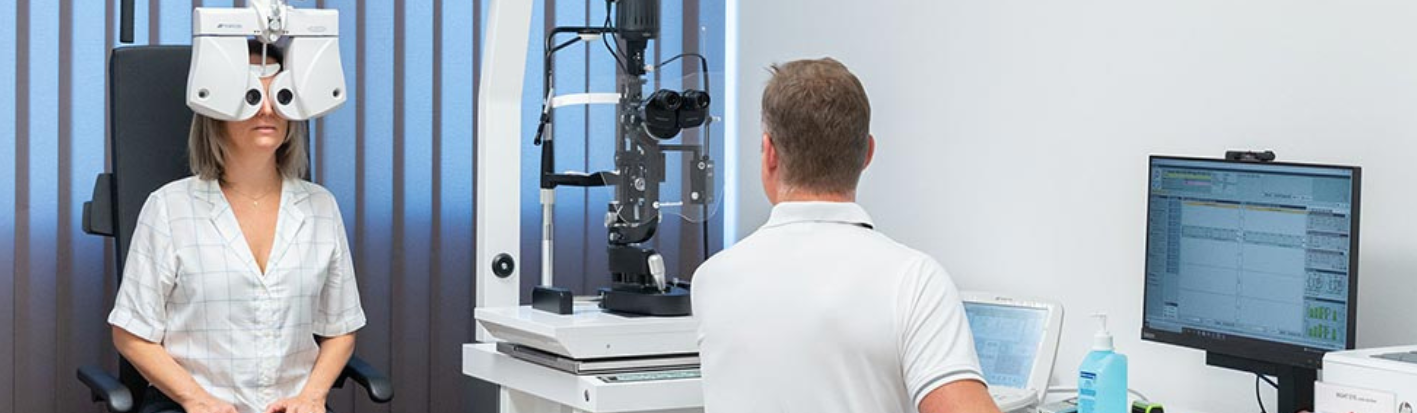
If fatigue persists despite rest, a comprehensive eye exam is recommended by your ophthalmologist to:
- Check the quality of the visual correction
- Identify an uncorrected or incorrectly corrected defect
- Fitting glasses or contact lenses
- Evaluate other solutions if necessary
What if refractive surgery was the solution?
Refractive surgery is a procedure that corrects vision problems, allowing you to see clearly without relying on glasses or contact lenses.
Who is refractive surgery for?
- Stabilized myopia, astigmatism, or hyperopia
- Discomfort associated with wearing glasses or contact lenses
- Chronic eye strain despite appropriate correction
- Desire for comfort and visual independence
A thorough preoperative assessment helps determine eligibility and the most appropriate technique.
What benefits can be expected from refractive surgery?
Refractive surgery allows you to:
- Correcting the visual defect at its source
- Reducing the brain's compensatory effort
- Improving visual comfort for the long term
- Reduce visual and mental fatigue
Many patients describe more restful vision and a marked improvement in their quality of life.
Key takeaways:
✔ Mental fatigue and visual fatigue have similar symptoms
✔ Inappropriate vision correction can cause overall fatigue
✔ An assessment can identify the real cause
✔ Solutions exist, from optical adjustments to refractive surgery
Before attributing your fatigue to stress or your busy lifestyle, consider your eyes as well.
⚠️ Important: Refractive surgery is a surgical procedure that must be carefully considered. It is not suitable for everyone, and a full assessment with a specialist is essential to determine whether you are eligible for refractive surgery and thus guarantee your safety.
The CNVO Center can be reached by phone at 024 552 04 00.